

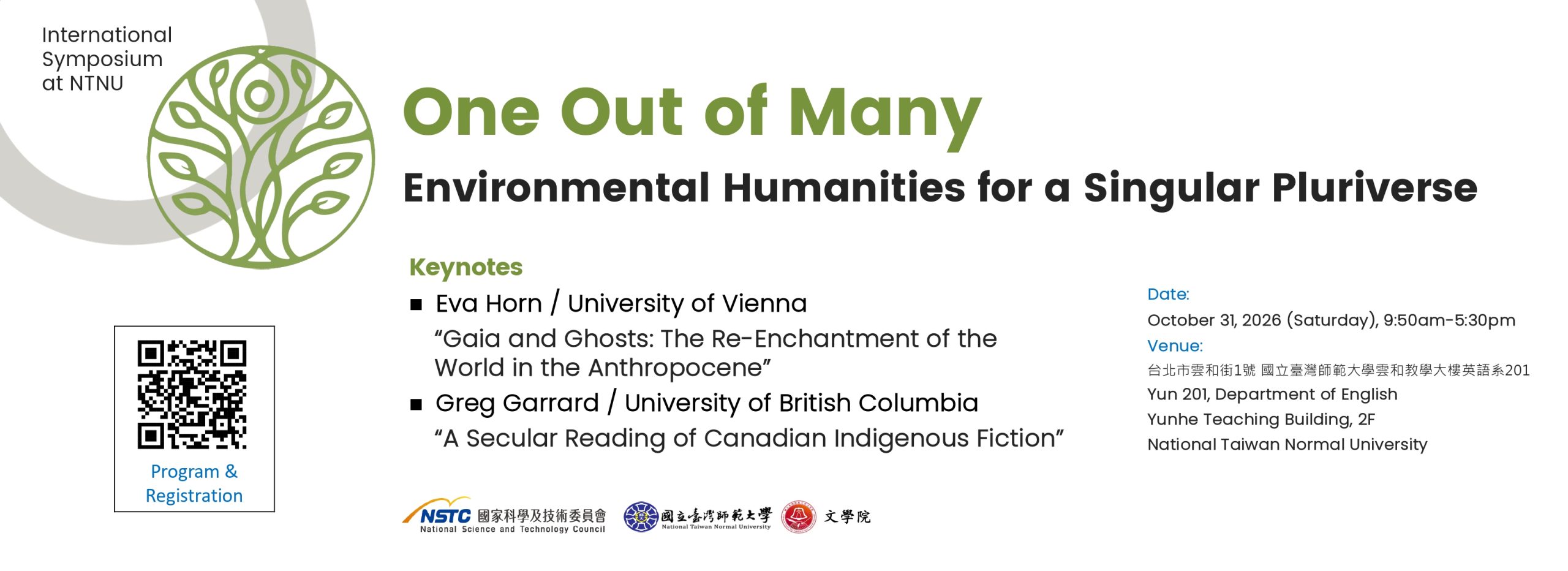
Ⅰ. Introduction
The principal challenge for the environmental humanities in the current moment is how to reconcile the obligatory universalism of ecological crisis with the irremediable pluralism of cultures.
Earth system science and related disciplines in the natural sciences depict a planet-wide crisis of habitability which threatens humanity in its entirety. Human actions are propelling the planet towards a “Hothouse Earth” scenario: an Earth that will be warmer than at any time during the past 1.2 million years, more biologically impoverished, and much less hospitable to human life. Avoiding such an outcome, they argue, will require the kind of unified, collective response which international organizations like the United Nations Framework Convention on Climate Change (UNFCCC) and the Intergovernmental Panel on Climate Change (IPCC) have been trying to muster since the 1990s.
Humanities scholars have generally reacted to these ideas with great skepticism. Some environmental historians view them as providing intellectual cover for a global power grab by technocratic elites. Political ecologists have pointed out that programs for climate change mitigation have regularly facilitated the expropriation of subsistence farmers. From the vantage point of decolonial thinkers, the new planetary politics looks like another chapter in the history of colonialism and capitalist globalization, which likewise relied on universalizing forms of knowing and acting on the world. They insist that only a radical break with globalized industrial modernity can halt the slide towards planetary catastrophe.
Dipesh Chakrabarty encapsulates the dilemma in a pithy phrase: One Planet, Many Worlds (2023). The impulse to place humanity within a single, planetary frame stands in open contradiction to concurrent efforts to rehabilitate ways of worlding that have been cast aside by industrial modernity. Both are equally necessary and legitimate—and yet both are also fraught with danger. The environmental humanities contain this contradiction already in their very name: the concept of “the environment” points towards a scientific, universally valid account of biophysical processes; the “humanities,” by contrast, take the plurality of human cultures in all their historical and geographical particularity as their necessary starting point. Borrowing a phrase from Tim Ingold, we find ourselves in a “singular pluriverse,” a world that is both one and many.
The title of our workshop points to this strategy of thinking by way of examples. “One out of many” translates the famous national motto of the United States: e pluribus unum has usually been taken to suggest the merger of particular identities into a singular, universal order. In the English translation, however, a different meaning comes to the fore: “one” here stands not only for the necessary endpoint of a historical movement but also for a representative case, a “one” that may represent a larger tendency but nonetheless remains irreducibly particular, fractious, and heteroclite.
Ⅱ. Program
| Time | Program | Speaker(s) / Topic |
|---|---|---|
| 9:30–9:50 | Registration | — |
| 9:50–10:00 | Opening Ceremony | — |
| 10:00–10:50 | Keynote 1 | Eva Horn (University of Vienna), “Gaia and Ghosts: The Re-Enchantment of the World in the Anthropocene” |
| 10:50–11:00 | Coffee Break | — |
| 11:00–12:30 | Panel 1 | Yih-Ren Lin & Pagung Tomi, Kathryn Yalan Chang, Mucahid Mustafa Bayrak |
| 12:30–13:30 | Lunch Break | — |
| 13:30–14:20 | Keynote 2 | Greg Garrard (University of British Columbia), “A Secular Reading of Canadian Indigenous Fiction” |
| 14:20–14:40 | Tea Break | — |
| 14:40–15:40 | Panel 2 | William Yau-nang Ng, Julian Chih-wei Yang |
| 15:40–16:40 | Panel 3 | Joan Chiung-huei Chang, Hannes Bergthaller |
| 16:40–16:50 | Break | — |
| 16:50–17:30 | Roundtable Discussion | NSTC Collaboration Project |
Ⅲ. Keynote Speaker
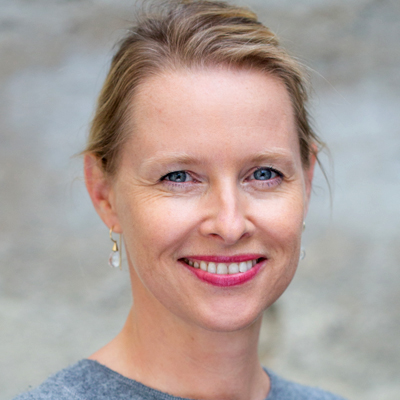
University of Vienna
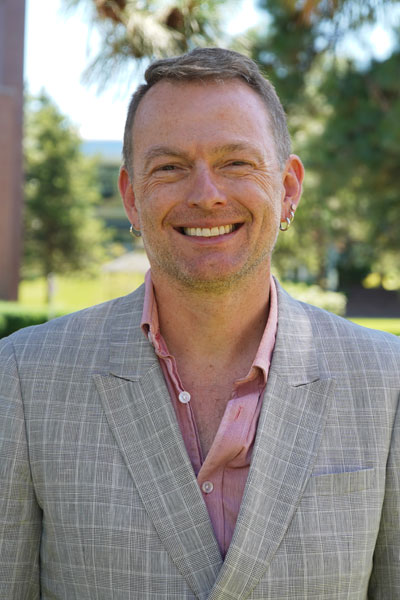
University of British Columbia